 Skip to content
Your chimney liner is one of those components you never think about until something goes wrong. It sits behind the masonry, out of sight, doing critical work: containing combustion gases, protecting the brick and mortar from heat and corrosion, and directing dangerous byproducts like carbon monoxide safely out of your home.
When a liner fails, the consequences range from reduced heating efficiency to genuine safety hazards. For homeowners across Central Indiana, understanding when and why a chimney liner needs replacement can save you from costly repairs down the road and keep your household safe.
What Does a Chimney Liner Actually Do?
A chimney liner (also called a flue liner) is the interior channel that runs from your firebox to the top of the chimney. It serves three essential functions:
Heat containment: The liner creates a barrier between the extreme temperatures inside your flue and the surrounding masonry, framing, and walls. Without it, heat transfer can ignite combustible materials adjacent to the chimney.
Corrosion protection: Combustion produces acidic byproducts that eat away at brick and mortar joints over time. The liner shields the masonry structure from this chemical attack, extending the life of your chimney.
Proper draft and venting: A correctly sized liner ensures your fireplace, wood stove, or furnace drafts efficiently. An oversized or damaged liner leads to poor draft, smoke spillage into your living space, and increased creosote accumulation.
The International Residential Code requires all masonry chimneys to have a liner. Indiana building codes follow this standard, meaning any chimney serving a fireplace, wood stove, or gas appliance in your Indianapolis-area home must have a functioning liner in place.
Signs Your Chimney Liner Needs Replacement
Liner damage doesn’t always announce itself with obvious symptoms. That’s one reason annual chimney inspections are so important. A CSIA-standard Level 2 inspection includes a thorough evaluation of your liner’s condition. That said, there are warning signs you can watch for:
Visible Deterioration
If you shine a flashlight up your flue and see cracked, broken, or missing tile sections, your clay liner has failed. Even hairline cracks in clay tile liners allow heat and gases to reach the surrounding masonry and structural framing. In older Indianapolis homes, especially those in neighborhoods like Broad Ripple, Meridian-Kessler, and Irvington where many chimneys date back 60 to 100+ years, original clay tile liners are frequently cracked or deteriorated.
White Staining on Exterior Masonry
Efflorescence (white mineral deposits) on the outside of your chimney often signals moisture penetrating through a damaged liner. When acidic flue gases escape through cracks, they pull moisture into the masonry, which then migrates outward and leaves mineral residue on the surface.
Smoke or Odor Issues
If your fireplace suddenly starts smoking into the room or you notice persistent flue odors even when the fireplace isn’t in use, a liner breach may be allowing gases to escape into the chimney structure rather than venting properly.
Chimney Fire History
Any chimney that has experienced a chimney fire, even a small one, should have its liner evaluated immediately. The extreme heat of a chimney fire (which can exceed 2,000°F) almost always damages clay tile liners, cracking or shattering them. Even if the exterior looks fine, the interior liner may be compromised.
Condensation and Rust
For chimneys venting gas appliances, excessive condensation or visible rust at the appliance connection often indicates a liner problem. Gas appliances produce significant moisture in their exhaust, and a damaged or improperly sized liner traps that moisture rather than venting it.
Why Indiana’s Climate Is Particularly Hard on Chimney Liners
Central Indiana’s weather creates a uniquely destructive cycle for clay tile chimney liners. Indianapolis averages around 100 freeze-thaw cycles per year, meaning days where the temperature crosses the 32°F threshold, often multiple times in a single week during late fall through early spring.
Here’s what happens: moisture enters existing micro-cracks in the clay tile, freezes, expands (by roughly 9% in volume), and then thaws. Each cycle widens those cracks incrementally. Over years and decades, this process turns minor surface imperfections into structural failures. It’s the same mechanism that creates potholes in Indiana roads, and it’s just as relentless on your chimney liner.
The problem is compounded in homes that go through heating seasons without consistent use. When a chimney sits cold for extended periods, moisture accumulates inside the flue. The first fire after a cold spell drives that moisture into the tile, and the next freeze cycle accelerates the damage. This pattern is particularly common in older homes throughout Indianapolis where original clay tile liners have endured 50, 70, or even 100+ years of Indiana winters.
Chimney Liner Material Options
When it’s time for a replacement, you have several options. Each has trade-offs in terms of durability, cost, and application. As an NFI Certified chimney service company and active NCSG member, we evaluate each chimney individually to recommend the right liner for the specific appliance, flue dimensions, and homeowner budget.
Stainless Steel Liners
Stainless steel is the most common and versatile chimney relining option for Indianapolis homes. These liners are manufactured as flexible or rigid tubes that are inserted down the existing flue and connected to the appliance or firebox.
Best for: Wood-burning fireplaces, wood stoves, gas appliances, oil furnaces. Virtually any application.
Durability: High-quality 316Ti alloy stainless steel liners carry lifetime warranties and can last 50+ years with proper maintenance.
Advantages: Excellent corrosion resistance, quick installation (often completed in a single day), and the ability to properly size the flue for the specific appliance being vented.
Cost range: $7,000–$10,000+ for most residential installations, depending on chimney height, diameter, and whether insulation wrapping is included.
For most homeowners in the Indianapolis area, a stainless steel liner represents the best combination of performance, longevity, and value. It’s what we install most frequently.
Aluminum Liners
Aluminum liners are a lighter, more affordable alternative, but they come with significant limitations.
Best for: Gas appliances only (specifically medium-efficiency gas furnaces and water heaters).
Not suitable for: Wood-burning appliances. Aluminum cannot withstand the temperatures produced by wood combustion.
Advantages: Lower material cost and lighter weight make installation straightforward.
Cost range: $800–$2,000 for residential gas appliance venting.
If your chimney exclusively vents a gas furnace or water heater and you don’t plan to add a wood-burning appliance, aluminum can be a cost-effective choice. However, many homeowners prefer stainless steel even for gas applications because of its superior durability.
Clay Tile Liners
Clay tile is the original liner material found in most masonry chimneys built before the 1980s. Replacement with new clay tile is still possible, but it’s significantly more involved than installing a metal liner.
Best for: Situations where maintaining the original construction style is a priority (such as historic preservation projects).
Limitations: Individual tiles must be installed from the top down through the existing flue, a labor-intensive process. Clay tile also cannot be bent or adjusted for chimney offsets.
Cost range: $2,500–$7,000+ depending on chimney height and accessibility. The labor component is substantially higher than metal liner installations.
Clay tile remains a solid performer when properly installed, but the installation cost and rigidity make it a less practical choice for most residential relining projects compared to stainless steel.
The Chimney Liner Replacement Process
Understanding what’s involved helps set realistic expectations. Here’s what a typical stainless steel liner installation looks like from start to finish:
Step 1: Inspection and Assessment
Every relining project begins with a thorough inspection of the existing flue. We assess the current liner’s condition, measure the flue dimensions, evaluate the chimney structure, and determine the correct liner size based on the appliance being vented. This step is critical because an improperly sized liner creates draft problems and safety issues.
Step 2: Preparation
The existing deteriorated liner material may need to be removed or broken out, depending on its condition and the approach being taken. The chimney interior is cleaned, and any obstructions are cleared. We set up drop cloths and containment inside your home to protect your living space.
Step 3: Liner Installation
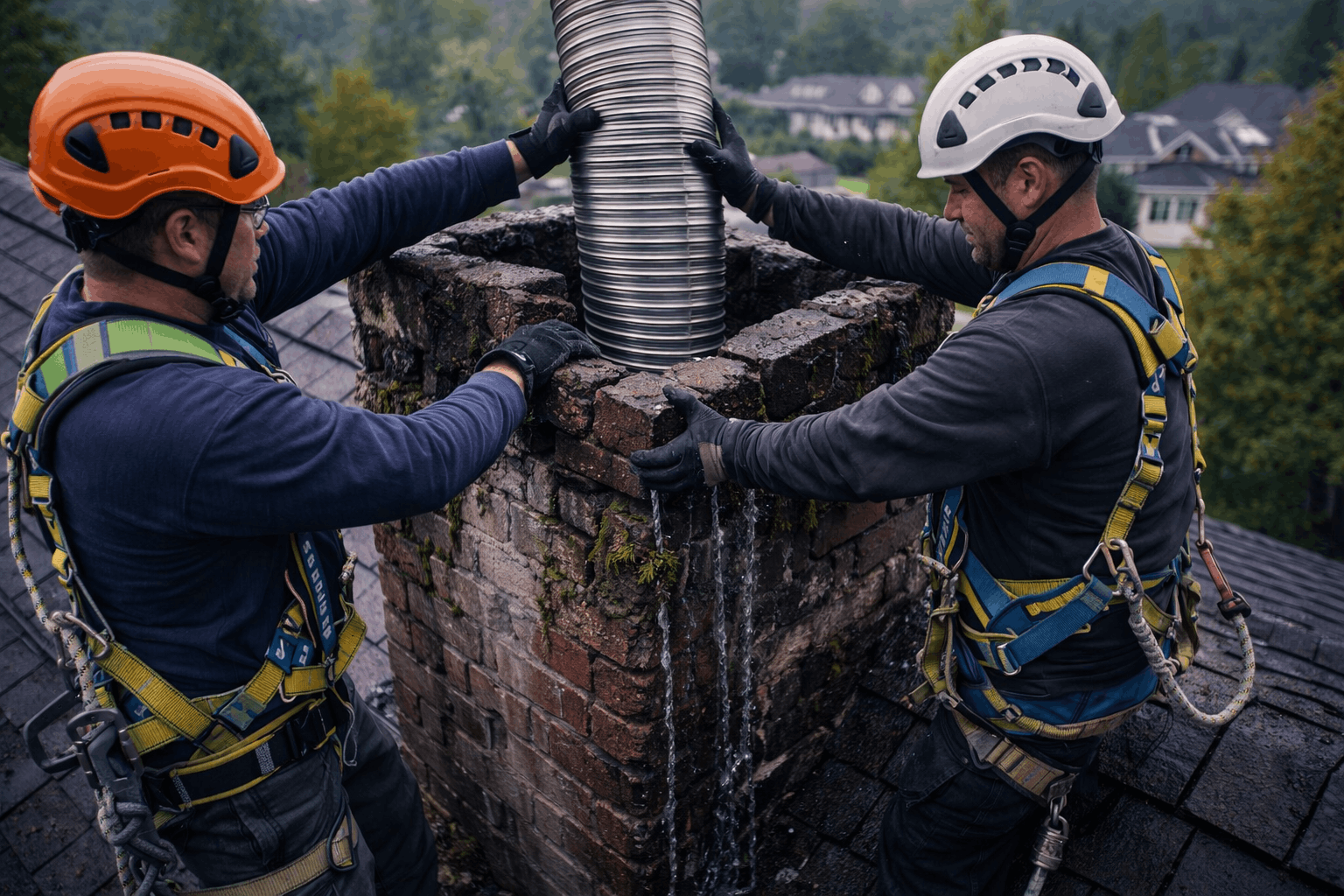
The new liner is lowered down the chimney from the rooftop. For flexible stainless steel liners, the tube is fed down through the existing flue and connected to the appliance or firebox at the bottom. Insulation blankets are typically wrapped around the liner before insertion to improve thermal performance and protect the surrounding masonry.
Step 4: Top and Bottom Connections
At the top, the liner is secured with a top plate and rain cap to prevent water entry. At the bottom, it’s connected to the appliance thimble or a stainless steel connector plate at the firebox. These connections are sealed to prevent gas leakage.
Step 5: Final Inspection and Testing
Once installed, we perform a final visual inspection and draft test to confirm the liner is drawing properly. We document the installation with photos and provide you with warranty information and maintenance recommendations.
Timeline and What to Expect
Most residential stainless steel liner installations are completed in a single day, typically 4 to 8 hours depending on chimney height, accessibility, and complexity. Clay tile replacements can take several days due to the labor-intensive nature of the work.
During installation, there will be work happening on your roof and inside the home at the fireplace or appliance connection. Expect some noise and minor dust, though professional containment procedures keep disruption to a minimum.
You should plan to have your heating appliance out of service for the duration of the installation. If you’re scheduling a relining during cooler months, make sure you have an alternative heat source available for the day.
How to Know It’s Time to Act
If your Indianapolis-area home has a chimney built before 1990, there’s a meaningful chance the original clay tile liner has sustained damage from decades of Indiana’s freeze-thaw cycles. If you’ve noticed any of the warning signs described above, or if it’s simply been several years since your last chimney inspection, it’s worth getting a professional assessment.
At Clean Sweep 317, we’ve been helping Central Indiana homeowners with chimney relining and repairs since 2014. We’re NFI Certified, members of the National Chimney Sweep Guild, and consistently recognized for quality workmanship, including our BBB A+ Rating and Three Best Rated award. When we inspect your liner, we’ll give you an honest assessment of its condition and walk you through your options without pressure.
Frequently Asked Questions
Q: How much does chimney liner replacement cost in Indianapolis?
A: Chimney liner replacement in the Indianapolis area typically ranges from $7,200 to $9,800+, depending on the liner material, flue size, chimney height, and condition of the existing structure. A standard stainless steel relining for a single-flue chimney falls toward the lower to mid range. Chimneys requiring structural repairs before relining or multi-flue configurations cost more. An inspection determines the exact scope and provides an accurate estimate.
Q: How long does a new chimney liner last?
A: Stainless steel chimney liners typically last 15 to 25 years, with many carrying manufacturer warranties of 20 years or more. Indiana’s aggressive freeze-thaw cycles make proper installation and insulation especially important for maximizing liner lifespan in this region. Annual chimney inspections help catch any issues early before they become costly problems.
Q: Can I use my fireplace if the chimney liner has cracks?
A: No. A cracked liner cannot safely contain combustion gases or prevent heat transfer to surrounding combustible materials. Even hairline cracks in a clay tile liner allow carbon monoxide and other gases to escape into the chimney structure and potentially into your living space. If an inspection identifies liner damage, the fireplace, wood stove, or any appliance venting through that flue should not be used until the liner is replaced.
Q: What type of chimney liner is best for a gas furnace or water heater?
A: Stainless steel liners rated for gas appliances are the standard choice. Gas appliances produce significant moisture in their exhaust, so the liner must be sized correctly to maintain adequate draft velocity and prevent condensation buildup inside the flue. An undersized liner for a gas appliance is as problematic as an oversized one. For certain medium-efficiency gas appliances, aluminum liners may also be suitable and offer a lower-cost option.
Q: Does chimney liner replacement require a building permit in Indianapolis?
A: Building permit requirements for chimney liner replacement vary by jurisdiction in the Indianapolis metro area. Some municipalities require a mechanical permit for liner installation, particularly when the project involves gas line work or changes to the venting configuration. Your chimney contractor should be familiar with local requirements and handle the permitting process as part of the project.
Q: Why is Indiana’s climate particularly hard on chimney liners?
A: Central Indiana averages around 100 freeze-thaw cycles per year, meaning temperatures cross the 32-degree threshold frequently throughout fall, winter, and early spring. Moisture that enters micro-cracks in clay tile liners expands when it freezes, widening the cracks with each cycle. Over years, this process turns hairline cracks into significant structural failures. This is why clay tile liners in Indianapolis-area homes often deteriorate faster than in regions with either consistently cold or consistently warm climates.
Schedule Your Chimney Liner Inspection
Not sure whether your chimney liner needs attention? Request an appointment with Clean Sweep 317 for a professional chimney inspection. We’ll evaluate your liner’s condition, explain what we find, and recommend the right solution for your home and budget. Serving Indianapolis, Carmel, Fishers, Noblesville, Zionsville, Brownsburg, and communities throughout Central Indiana.