 Skip to content
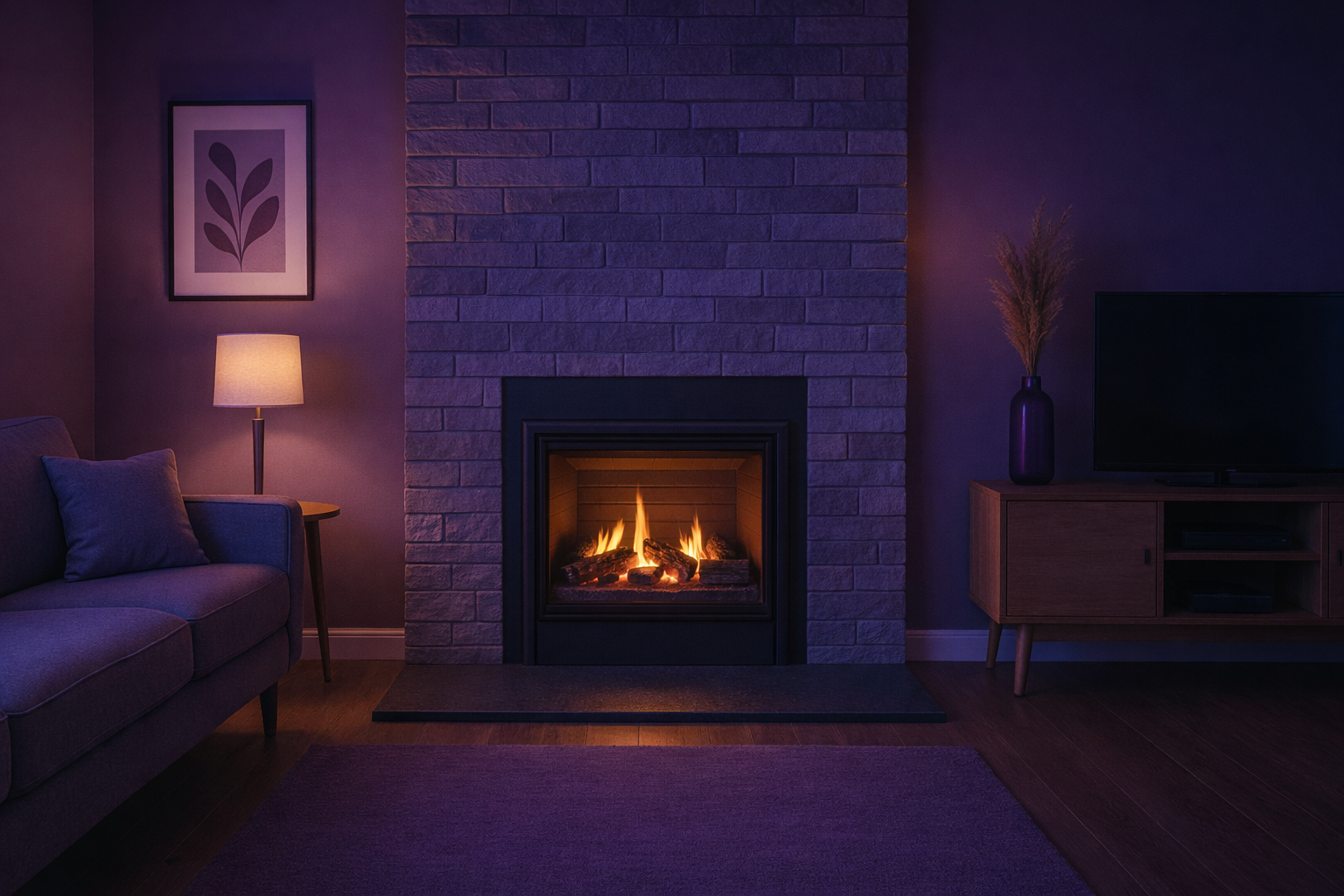
You love the idea of a crackling fire on a cold Indiana evening, but you’re tired of hauling wood, cleaning ash, and waiting 30 minutes for flames to get going. Or maybe your wood-burning fireplace has been sitting unused for years because the hassle just isn’t worth it.
Converting to gas changes everything. Flip a switch, enjoy instant flames. Flip it off, walk away—no embers to monitor, no ash to clean, no creosote buildup to worry about.
But here’s what most homeowners don’t realize: “converting to gas” isn’t one thing. Your options range from a simple $700 upgrade to a $9,000+ transformation—and the right choice depends on what you actually want from your fireplace. This guide breaks down your options, costs, and what to expect during the conversion process.
Quick Decision: Which Conversion Is Right for You?
Before diving into details, here’s a quick framework based on what Indianapolis homeowners typically want:
| If You Want… | Best Option | Budget Range |
| Lower cost, keep vented option if fireplace is suitable | Log Lighter + Vented Gas Logs | $700 – $3,200 |
| Significant heat output and efficiency | Gas Fireplace Insert | $6,700 – $11,000 |
| No chimney or safe venting available | Ventless Gas Logs | $2,200 – $3,000 |
| Ambiance only, minimal heat needed | Electric Insert | Varies by model |
Your Two Main Options: Gas Logs vs. Gas Inserts
When converting a wood-burning fireplace to gas, you have two primary paths. They look similar from across the room, but they work very differently.
Gas Logs: The Simpler, More Affordable Choice
Gas logs are ceramic or concrete logs designed to look like real wood, with a gas burner underneath. They install directly into your existing fireplace opening—your chimney continues to function as it always has, venting combustion gases up and out.
Advantages of gas logs:
- Lower upfront cost ($700–$3,200 installed)
- Same-day installation in most cases
- Can convert back to wood-burning if desired (vented models)
- Realistic flame appearance with quality sets
- Works during power outages (models with standing pilot)
Limitations to consider:
- Most heat escapes up the chimney (10–30% efficiency)
- Damper must stay open during use (cold air infiltration)
- Better for ambiance than serious heating
Gas Fireplace Inserts: The High-Efficiency Upgrade
A gas insert is a sealed, self-contained unit that slides into your existing fireplace opening. It has its own firebox, glass front, and venting system (typically a liner that runs up your existing chimney). Think of it as installing a brand-new high-efficiency appliance inside your old wood-burning fireplace.
Advantages of gas inserts:
- High efficiency (70–85% of heat stays in the room)
- Significant heat output—can warm 1,000–2,500 sq ft depending on model
- Sealed combustion (doesn’t use indoor air for burning)
- Thermostat and remote control options standard
- Modern styling options available
Limitations to consider:
- Higher upfront cost ($6,700–$11,000 installed)
- More complex installation (half-day to full-day project)
- Permanent change—no converting back to wood-burning
Gas Logs vs. Gas Insert: Side-by-Side Comparison
| Feature | Gas Logs | Gas Insert |
| Installed Cost | $700 – $3,200 | $6,700 – $11,000 |
| Heat Efficiency | 10–30% | 70–85% |
| Heating Capacity | Minimal (ambiance) | 1,000–2,500 sq ft |
| Installation Time | 2–4 hours | 4–8 hours |
| Reversible? | Yes (vented) | No |
| Thermostat Control | Some models | Standard |
| Best For | Occasional use, ambiance | Regular heating, efficiency |
What Does a Wood-to-Gas Conversion Cost in Indianapolis?
Conversion costs vary based on your existing setup, what you’re installing, and any prep work needed. Under normal circumstances, Indianapolis costs range from $700–$9,000. Here’s how that breaks down:
Gas Log Installation Costs
| Gas Log Type | Typical Cost (Installed) |
| Log lighter + Vented gas logs (basic-mid range) | $700 – $3,200 |
| Premium vented gas logs | ~$2,800 |
| Ventless gas logs | $2,200 – $3,000 |
Gas Insert Installation Costs
| Insert Type | Typical Cost (Installed) |
| Gas fireplace insert (depending on options and unit) | $6,700 – $11,000 |
| Premium gas insert | Starts ~$8,500 |
Additional Costs to Consider
| Service | Cost Range |
| Gas line installation (varies by run length and difficulty) | $450 – $2,000 |
| Chimney inspection (recommended before conversion) | $150 – $300 |
| Chimney relining (if required for insert) | $1,500 – $3,500 |
| Permit fees (varies by municipality) | $50 – $150 |
Factors That Affect Your Final Price
Several factors can push your project toward the higher or lower end of these ranges:
- Gas line proximity: If gas already runs near your fireplace, connection is straightforward. Running a new line from your basement or across the house adds $450–$2,000 depending on run length and difficulty.
- Fireplace size: Larger openings require larger (more expensive) log sets or inserts. Many Indianapolis homes built in the 1950s–70s have oversized masonry fireplaces.
- Chimney condition: If your chimney needs repairs or relining before conversion, that adds to the project. A chimney inspection upfront prevents surprises.
- Unit selection and options: Premium brands with highly realistic flames, remote controls, and thermostat integration cost more than basic models.
- Electrical requirements: Some inserts with blowers or electronic ignition need nearby electrical outlets.
Vented vs. Ventless Gas Logs: What Indianapolis Homeowners Should Know
If you choose gas logs over an insert, you’ll face another decision: vented or ventless. This choice has implications for installation, operation, and air quality.
Vented Gas Logs
Vented logs require an open damper and functioning chimney. Combustion gases exit through the chimney, just like with a wood fire. This is the safer choice if you have air quality concerns, and it produces the most realistic flame pattern—tall, dancing flames with yellow tips. The tradeoff: significant heat escapes up the chimney. Vented gas logs are the recommended option when your fireplace is suitable for use.
Ventless (Vent-Free) Gas Logs
Ventless logs burn so cleanly that they’re designed to operate without a chimney—combustion byproducts stay in your living space. They’re more efficient (nearly 100% of heat stays in the room) and are an option when no chimney or safe venting is available. However, they add moisture to indoor air and require adequate room ventilation. Some people are sensitive to the combustion byproducts. Indiana allows ventless gas appliances with certain requirements, including oxygen depletion sensors.
For most Indianapolis homes with functioning chimneys, we recommend vented gas logs or a direct-vent insert. They offer peace of mind on air quality while still providing the convenience of gas.
Electric Inserts: The Ambiance-Only Alternative
If you’re primarily looking for ambiance without significant heating, electric inserts are worth considering. They require no gas line, no venting, and installation is straightforward—often just plugging into a standard outlet. Modern electric inserts feature realistic LED flame effects and can be operated year-round without adding heat to your space. While they won’t provide the same warmth as gas options, they’re an excellent choice for decorative purposes.
What to Expect During the Conversion Process
A professional gas fireplace conversion typically follows these steps:
- Initial assessment: A qualified technician inspects your existing fireplace, measures the firebox, assesses chimney condition, and determines gas line requirements. This is when you’ll discuss your goals—ambiance vs. heating, budget, and aesthetic preferences.
- Chimney inspection: Even though you’re switching away from wood, your chimney still plays a role for vented systems. An NFI-certified technician can identify any issues that need addressing before installation.
- Gas line work: If you don’t have gas running to your fireplace location, a licensed professional will run a line from your existing supply. The line must be sized appropriately for the BTU output of your new appliance.
- Installation: For gas logs, this involves placing the burner, connecting gas, arranging logs, and testing. For inserts, it includes installing the unit, running a vent liner up the chimney, sealing, and connecting gas and electrical components.
- Testing and walkthrough: Your technician tests thoroughly—checking for gas leaks, proper ignition, flame appearance, and (for inserts) blower and thermostat function. You’ll receive a walkthrough on operation, maintenance, and safety.
Why Indianapolis Homeowners Are Making the Switch
Central Indiana’s climate makes gas conversion particularly appealing:
- Cold winters, busy lives: When it’s 15°F outside and you just got home from work, waiting to build a wood fire isn’t appealing. Gas gives you instant heat and ambiance.
- Zone heating savings: A high-efficiency insert can heat your main living space while you turn down the furnace. Many homeowners in Carmel, Fishers, and Noblesville report noticeable utility savings, especially during shoulder seasons.
- Allergy and air quality concerns: Wood smoke triggers allergies and asthma. Gas burns much cleaner, with no particulates entering your living space—especially with sealed inserts.
- No wood storage hassles: No buying, stacking, drying, or hauling firewood. No insects hitching rides into your house. No bark and debris on your floor.
- Reduced fire risk: Gas doesn’t produce creosote—the leading cause of chimney fires. No sparks or rolling logs to worry about.
Choosing a Contractor for Your Gas Conversion
Gas appliance installation isn’t a DIY project. Improper installation can result in gas leaks, carbon monoxide poisoning, or fire. When evaluating contractors, look for:
- NFI Certification: The National Fireplace Institute certifies technicians specifically in gas appliance installation. This is the gold standard for fireplace work.
- Chimney expertise: A company that understands both chimneys and gas appliances can assess your full system—not just install a product.
- Proper licensing and insurance: Gas work requires appropriate licensing in Indiana. Verify insurance coverage before work begins.
- Manufacturer certifications: Many premium brands require installer certification to honor warranties.
- Local reputation: Check Google reviews, BBB ratings, and ask for references. A company that’s served the Indianapolis area for years has a reputation to protect.
Frequently Asked Questions
Can any wood-burning fireplace be converted to gas?
Most can, but some older or unusually sized fireplaces have limitations. A professional assessment determines what options work for your specific fireplace. Prefabricated (factory-built) fireplaces have different requirements than masonry fireplaces.
Will I still need chimney cleaning after converting to gas?
Gas doesn’t produce creosote like wood, so you won’t need annual sweeping. However, annual inspections are still recommended to check for blockages (birds, debris), ensure proper venting, and verify all components function safely.
How long does a gas fireplace conversion take?
Gas log installation typically takes 2–4 hours. Gas insert installation takes 4–8 hours. If gas line work is needed, that may add time or require a separate visit.
Can I convert back to wood-burning later?
With vented gas logs, yes—they’re designed to be removable. With a gas insert, conversion back to wood is technically possible but expensive and rarely done. Consider an insert a permanent change.
Do gas fireplaces work during power outages?
Gas logs with a standing pilot or millivolt ignition work without electricity. Many gas inserts with electronic ignition won’t operate during outages unless they have battery backup. If power-outage operation matters to you, discuss this during your consultation.
Is natural gas or propane better?
If you have natural gas service (most Indianapolis homes do), that’s typically the more convenient and cost-effective choice. Propane works for homes without natural gas but requires a tank and regular refills. Most appliances can be configured for either fuel.
Ready to convert your wood-burning fireplace to gas? Schedule an assessment to discuss your options, get accurate pricing for your specific fireplace, and find the solution that fits your goals and budget. Call 317-643-1128 or request an appointment online.